

Why you need to take naps
 I welcome any scientific evidence that proves what I am doing is healthy. Readers of my blog will remember that I took a strong position againt the so-called “power-nap killers.” New scientific research shows that naps help your brain to learn better. I sometimes even take two naps to rejuvenate my body and mind. If your boss does not believe in powernaps, show him or her the evidence and say: Don’t you want me to be more productive!
An afternoon nap markedly boosts the brain’s learning capacity By Yasmin Anwar
If you see a student dozing in the library or a co-worker catching 40 winks in her cubicle, don’t roll your eyes. New research from the University of California, Berkeley, shows that an hour’s nap can dramatically boost and restore your brain power. Indeed, the findings suggest that a biphasic sleep schedule not only refreshes the mind, but can make you smarter.
Continue ReadingWikiLeaks Founder on the Run, Trailed by Notoriety
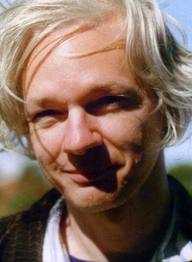 There is often a fine line between a hero and villain. Many people have a hard time realizing: just because people have done a good thing it does not mean that they are nice people. By the same token, just because somebody is nice, it does not mean that they make a positive difference in the world. Life is complicated and people are complex!
By JOHN F. BURNS and RAVI SOMAIYA (NY Times)
LONDON—Julian Assange moves like a hunted man. In a noisy Ethiopian restaurant in London’s rundown Paddington district, he pitches his voice barely above a whisper to foil the Western intelligence agencies he fears. He demands that his dwindling number of loyalists use expensive encrypted cellphones and swaps his own as other men change shirts. He checks into hotels under false names, dyes his hair, sleeps on sofas and floors, and uses cash instead of credit cards, often borrowed from friends.
Continue Reading
Rushmore
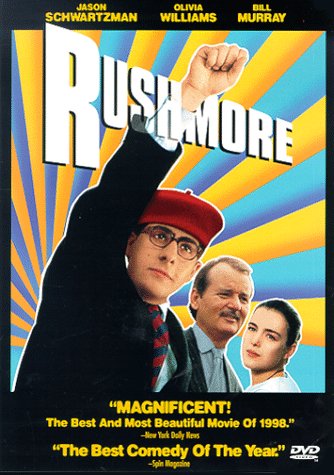 Wes Anderson’s 2nd film, released in 1998, is an even bigger surprise than Bottle Rocket. The 15-year old hero, Max Fisher, loves his elite prep boarding school but he faces a pressing problem. Although he leads almost every extra-curricula club in the school and although he is a genius on many fronts, he is academically underperforming and on the verge of being expelled. Falling in love with a teacher does not help his cause. Anderson goes even further than in Bottle Rocket to drill deeply into the complexities of human relationships. Anderson places five other main characters into Max’s world and every single relationship is unique but deep. I enjoyed every minute of this extraordinary film. Go see it. And after you have watched it read a bit more about the fascinating back ground of the film on Wikipedia. Anderson’s 2nd film also lost money, proving that high art and commercial success often do not coincide.
Bottle Rocket
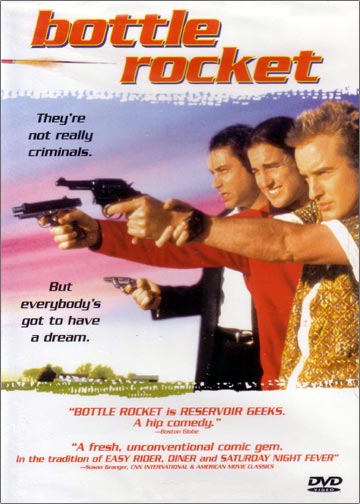 A few months ago I read a story about the director Wes Anderson in the New Yorker. Anderson was hailed as an innovative filmmaker with a peculiar style. I had seen his The Royal Tenenbaums when it came out and found the film different but not particularly compelling. It struck me as trying to take a different perspective for the sake of taking a different perspective, rather than trying to take a novel perspective to shed light the centrality and challenges of family in our lives. The portrait of Anderson in the New Yorker, however, made it apparent that there was more to this filmmaker that met the eye in the The Royal Tenenbaums. I just watched his first film ever, Bottle Rocket. It was a complete commercial failure, but boy is this film a charmer. I can fully understand why Martin Scorsese named Bottle Rocket one of his top-ten favorite movies of the 1990s. Bottle Rocket follows three losers in a rich Texas neighborhood who come to the conclusion that “crime does pay.”

A Single Man
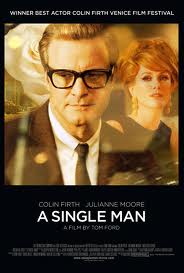 If we don’t meet or if we lose the one person we are meant to be with, then our life is not worth living. Everything becomes meaningless. This is the key premise of the film. It is wrong. But if you suspend your critical faculties and assume this idea is correct for the duration of the film, A Single Man is a beautiful exploration of the premise. Fashion designer Tom Ford brings his aesthetic sensibilities and his 23-year experience of living with one and the same gay partner to direct a film that is nothing like what the enticing trailer made you believe. I want to live in the house of lead character, an Englishman (Colin Firth) who has taken up the teaching of literature in some LA college, calls his own. (I now wish more directors had studied interior design like Tom Ford!) Colin Firth delivers a spectacular performance. Aesthetically the film appealed to me more than its 1998 cousin, Gods and Monsters.
What I will take with me onto a deserted island
You dog lovers out there can appreciate the conundrum of having to answer the following question honestly: “If you had to live the rest of your life on deserted island, who would you take with you?” The idea behind this question is that you would have to make the tough choice of picking your favorite human being—the proverbial one and only one. Answering, “I would actually like to take Max, my lovely Chihuahua dog, onto the deserted island because he is the center of my emotional life,” is not going to win you brownie points with most interlocutors, your spouse, your partner, or even your mother if she happens to standing next to you. When I get asked this question (and I am alone), this is my favorite answer: “I would like to take a DVD with every single edition of the New Yorker since 1925 with me. ” With this answer I am sure to startle my interlocutors. Yes, I honestly believe one human being could never amount to the collective intelligence and humanity of the entire ensemble of writers for the New Yorkers since 1925. Today the New Yorker launched its iPad application. After seeing this introductory commercial with Jason Schwartzman, I decided to change my answer to the Robinson Crusoe question. Henceforth I shall say: “If Apple soon allows the New Yorker to put its entire archive on the Ipad, it will definitely be an iPad.”
Letting Go: What should medicine do when it can’t save your life?
 Atul Gawande, a doctor and staff writer of the New Yorker, has already received numerous awards for this writing. Now he has penned in the New Yorker (August 2, 2010) a report on how American medicine handles the final stages of our lives. This is the most difficult story I have read in many years, perhaps ever. But I forced myself to read it all the way to the end. You owe it to youself to do the same. Gwande deserves the Pulitzer Prize for this article.
Read “Modern medicine is good at staving off death with aggressive interventions—and bad at knowing when to focus, instead, on improving the days that terminal patients have left” here.
Continue Reading
My Darling Clementine
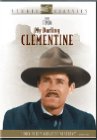 When you visit Tombstone, Arizona, you will be struck by how small the town is yet how big a role it plays in the mythical version of American history. My Darling Clementine is the third movie I have seen about Wyatt Earp, Doc Holliday, and the gunfight at the OK Corral (Tombstone, 1993, & Wyatt Earp, 1994, are the others). John Ford (director) gave this 1946 version a different look and sensiblity. Shooting landscapes for along time, he is trying to give you a sense what it felt like to live in the West in the 1880s. David Brooks identified correctly that the challenge in the Wild West was to build communities in the absence of a strong local governments (see his editorial). Wyatt Earp is even shyer with ladies (Clementine) than in the other films. There is a funny line when Wyatt has fallen in love with Clementine who by anyone’s standards is a stunning lady. Wyatt to the Bartender: “Have you never been in love.” Bartender: “No, I have been a bartender my entire life.”

© 2026 Peter Murmann. Powered by ExpressionEngine.


